Invited Speakers of Joint Conference Chemistry 2026
Speaker Profiles
Plenary Speakers
Dr. Kuanbo Zhou
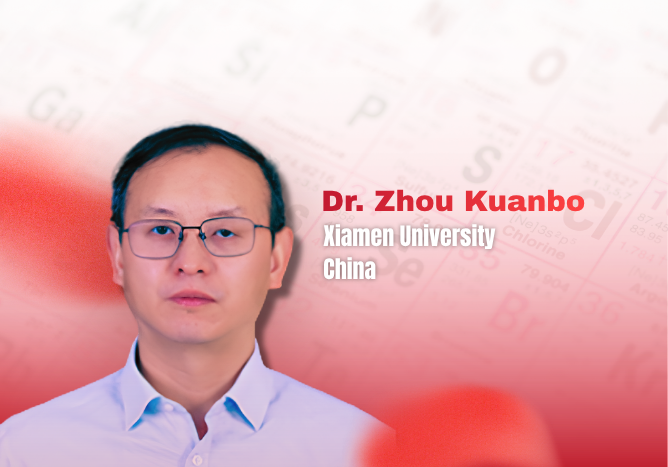
Name: Dr. Kuanbo Zhou
Institution: Xiamen University
Country: China
Kuanbo Zhou is a marine biogeochemist who investigates how carbon, nutrients, trace metals and natural radionuclides move through the ocean. His research uses uranium–thorium-series tracers and elemental and isotopic measurements to quantify particle export and reveal coupling—or decoupling—among carbon, nitrogen, phosphorus and silicon cycles. By examining processes from particle exchange to mesoscale eddies and boundary currents, his work helps explain how ocean physics and chemistry regulate long-term carbon sequestration.
Prof. Shu Yin, Ph.D.
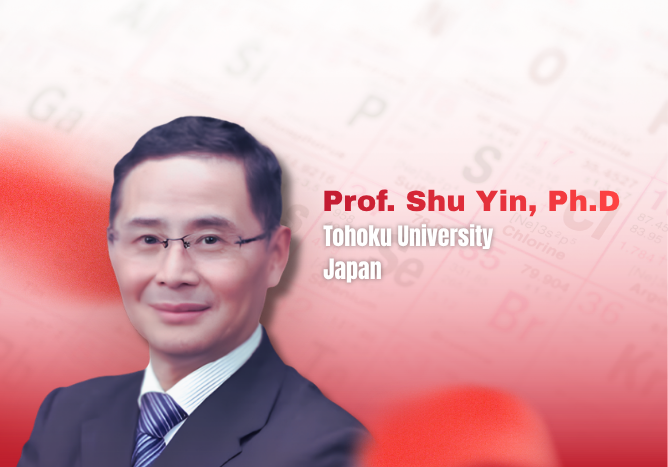
Name: Prof. Shu Yin, Ph.D.
Institution: Tohoku University
Country: Japan
Shu Yin creates environmentally responsive inorganic nanomaterials through solvothermal and other soft-chemical processes. By controlling composition, crystal phase, morphology and defects, his laboratory develops visible-light photocatalysts, gas sensors, UV/infrared-shielding materials, transparent conductors and functional pigments. The unifying aim is to make ceramics and mixed-anion compounds respond efficiently to light and chemicals, supporting environmental clean-up, energy efficiency and advanced sensing.
Assoc. Prof. Saluma Samanman, Ph.D.
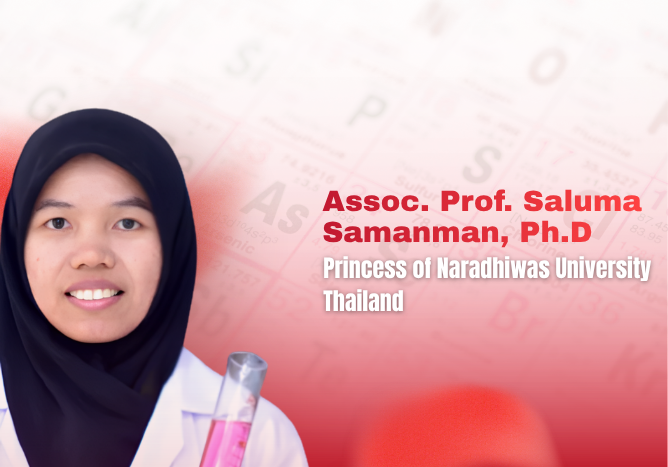
Name: Assoc. Prof. Saluma Samanman, Ph.D.
Institution: Princess of Naradhiwas University
Country: Thailand
Saluma Samanman works on chemical sensing and biosensing, joining nanostructured electrode design with practical analytical applications. Her research has demonstrated highly sensitive, label-free immunosensors built from layered gold nanoparticles and nanocomposite cryogel electrodes, including platforms for biomarker detection. She also investigates accessible colorimetric assays, such as anthocyanin-based naked-eye detection of iron in water, bringing advanced analytical chemistry closer to low-cost environmental and community use.
Assoc. Prof. ChM. Dr. Aemi Syazwani Abdul Keyon
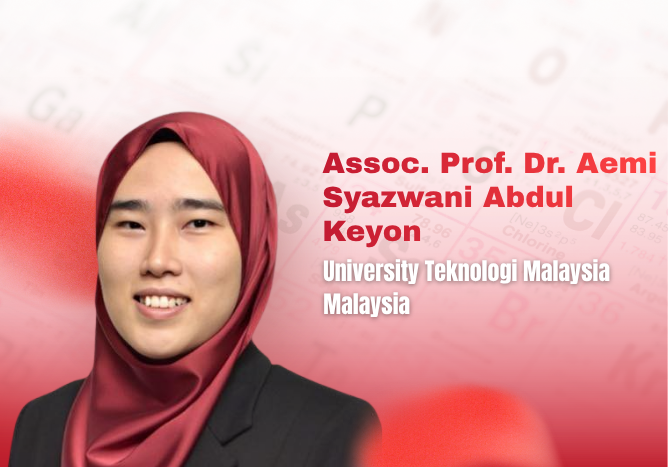
Name: Assoc. Prof. ChM. Dr. Aemi Syazwani Abdul Keyon
Institution: Universiti Teknologi Malaysia
Country: Malaysia
Aemi Syazwani Abdul Keyon is an analytical chemist whose work makes trace analysis more sensitive, selective and sustainable. She specializes in separation science—particularly chromatography, capillary electrophoresis, microfluidics and sample preconcentration—and develops extraction materials and analytical methods for pollutants, food and forensic samples. Her group has also explored waste-derived magnetic sorbents, connecting high-performance chemical analysis with green materials and the circular use of agricultural residues.
Prof. Amin Fatoni, S.Si., M.Si., Ph.D.
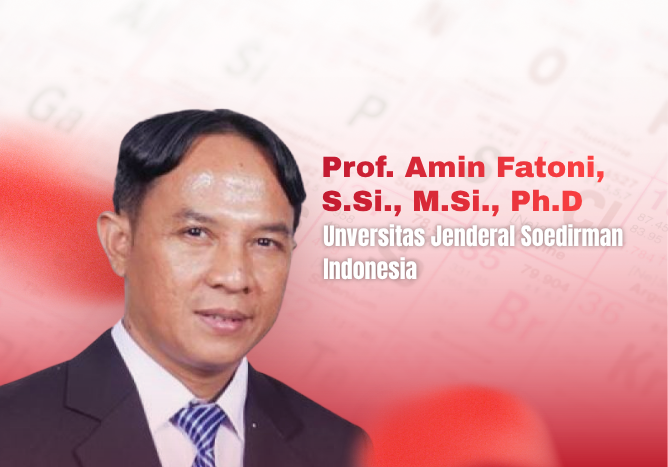
Name: Prof. Amin Fatoni, S.Si., M.Si., Ph.D.
Institution: Universitas Jenderal Soedirman
Country: Indonesia
Amin Fatoni works in biochemistry and biosensor development, particularly the immobilisation of enzymes on functional supports for selective chemical detection. His research includes urease- and glucose-based biosensors, cryogel and magnetic-nanoparticle composites, and non-invasive optical approaches to neonatal jaundice monitoring. A recurring goal is to turn biological recognition mechanisms and locally sourced materials into affordable analytical devices with medical, food and environmental relevance.
Invited Speakers
Angga Hermawan, Ph.D.
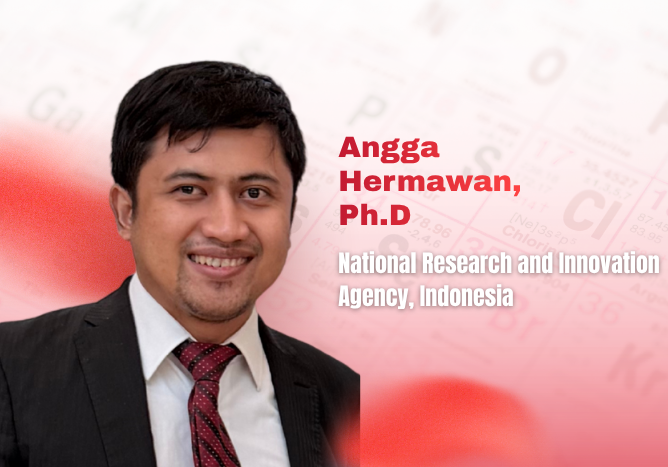
Name: Angga Hermawan, Ph.D.
Institution: National Research and Innovation Agency (BRIN)
Country: Indonesia
Angga Hermawan develops functional nanomaterials at the intersection of electrochemistry, sensing and sustainable energy. His publication record centres on two-dimensional and carbon-based materials, electrocatalysis and supercapacitors, with work that engineers surface chemistry and nanoscale architecture to improve charge storage, catalytic response and chemical detection. His recent inventorship also includes a plant-derived carbon-dots/reduced-graphene-oxide nanocomposite, illustrating an interest in translating locally available biomass into higher-value functional materials.
Dewi Kurnianingsih Arum Kusumahastuti, S.Si., M.S., Ph.D.
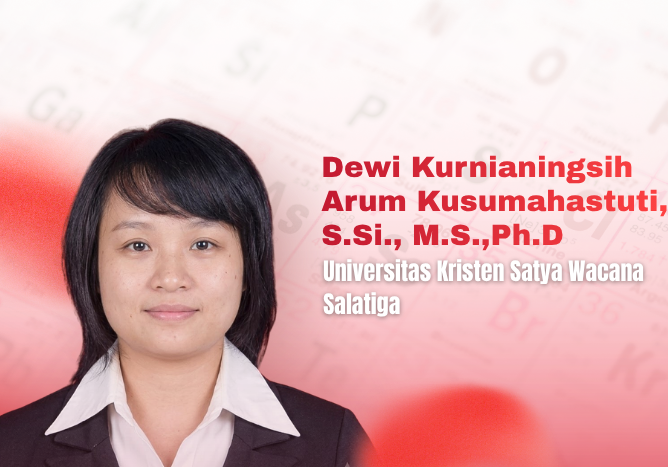
Name: Dewi Kurnianingsih Arum Kusumahastuti, S.Si., M.S., Ph.D.
Institution: Universitas Kristen Satya Wacana
Country: Indonesia
Dewi Kurnianingsih Arum Kusumahastuti pursues green, natural-product and inorganic chemistry with an emphasis on materials made from renewable or recovered resources. Her recent work spans plant-based food systems, biomass-derived products, sustainable biocomposites and green nanotechnology, including silver nanoparticles synthesized with brewed coffee-ground extract. Across these themes, she connects chemical characterization with practical questions in food, energy and circular-material design.
Dr. Mulyatun, M.Si.
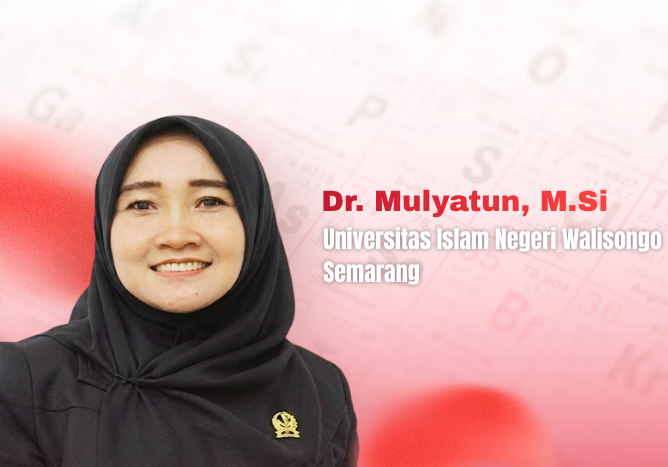
Name: Dr. Mulyatun, M.Si.
Institution: Universitas Islam Negeri Walisongo Semarang
Country: Indonesia
Mulyatun studies heterogeneous catalysis and resource recovery for cleaner fuel production. A central strand of her research develops acid–base bifunctional catalysts—especially modified CaO and metal-oxide systems—to convert low-quality or waste cooking oil into biodiesel while tolerating chemically challenging feedstocks. Her broader work includes biomass-derived silica and biochar adsorbents, linking catalytic process design with waste valorisation and environmental remediation.
Fitria Fatichatul Hidayah, S.Si., M.Pd., Ph.D.
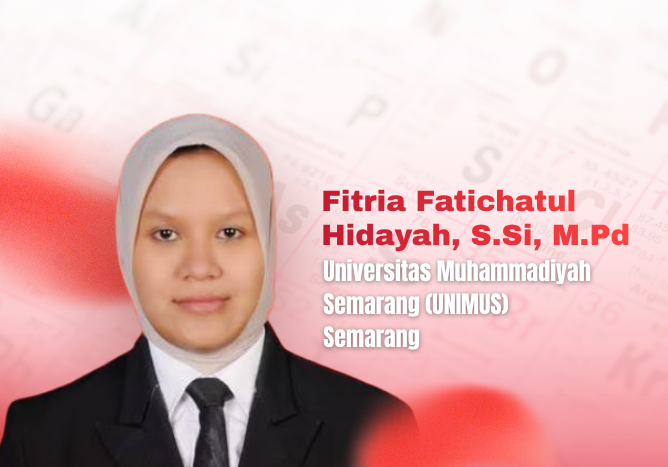
Name: Fitria Fatichatul Hidayah, S.Si., M.Pd., Ph.D.
Institution: Universitas Muhammadiyah Semarang (UNIMUS)
Country: Indonesia
Fitria Fatichatul Hidayah researches chemistry education, especially how laboratory learning can become safer, smaller in scale and more intellectually engaging. Her studies examine microscale chemistry, pedagogical content knowledge, contextual and ethnochemical teaching, and the development of students’ critical chemical literacy. Through bibliometric mapping and classroom-based interventions, she connects evidence about global teaching trends with practical learning designs suited to schools and teacher education.
Ir. Marcelinus Christwardana, S.T., M.T., Ph.D., IPM., ASEAN Eng.
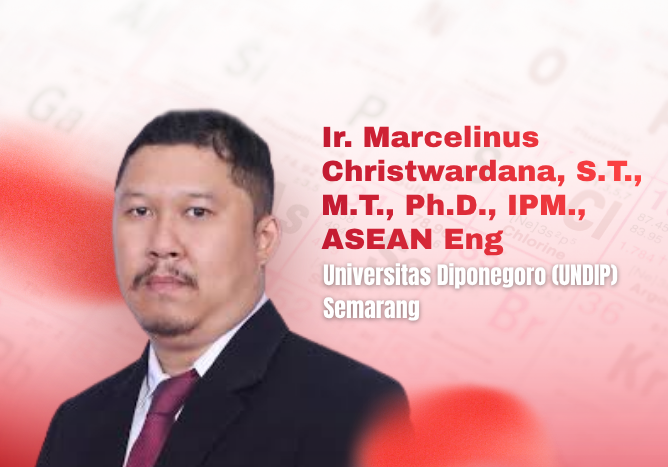
Name: Ir. Marcelinus Christwardana, S.T., M.T., Ph.D., IPM., ASEAN Eng.
Institution: Universitas Diponegoro
Country: Indonesia
Marcelinus Christwardana leads research in bioelectrochemistry, where enzymes, microbes and functional electrodes are designed to generate electricity or detect chemical conditions. His portfolio spans enzymatic and microbial fuel cells, biosensors, biobatteries and photo-bioelectrochemical systems, often incorporating waste-derived materials such as calcined eggshells or biomass. This work combines electrochemical engineering with biological catalysis to create lower-impact energy and sensing technologies.
Prof. Dadan Hermawan, S.Si., M.Si., Ph.D.
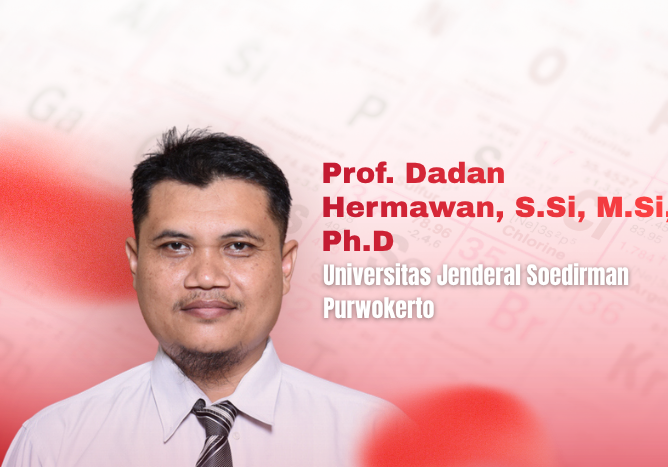
Name: Prof. Dadan Hermawan, S.Si., M.Si., Ph.D.
Institution: Universitas Jenderal Soedirman
Country: Indonesia
Dadan Hermawan is an analytical chemist focused on separating and measuring complex chemical mixtures, with particular strength in chiral analysis. He develops capillary electrophoresis, micellar electrokinetic chromatography, microextraction and HPLC methods for pharmaceuticals, pesticides and natural products. His work on cyclodextrin selectors and surface-modified nanoparticles seeks to distinguish molecular mirror images reliably, while related projects advance low-cost instruments and cryogel-based biosensors for accessible analysis.
Prof. Venty Suryanti, S.Si., M.Phil., Ph.D.
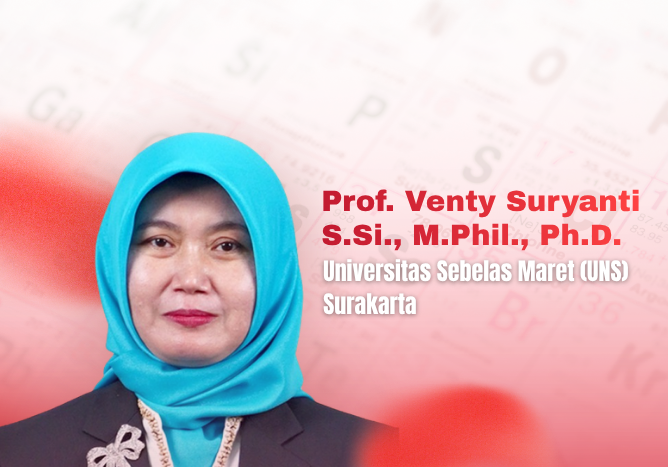
Name: Prof. Venty Suryanti, S.Si., M.Phil., Ph.D.
Institution: Universitas Sebelas Maret (UNS)
Country: Indonesia
Venty Suryanti is a synthetic and bioorganic chemist whose research draws functional compounds and materials from biological resources. She investigates natural products with antioxidant, antidiabetic and antibacterial activity; biosurfactants produced by microorganisms; and cellulose-based membranes and derivatives made from agricultural residues. Her work connects molecular synthesis and characterisation with medicinal chemistry, sustainable separation materials and the higher-value use of biomass.
Samuel Budi Wardhana Kusuma, S.Si., M.Sc., Ph.D.
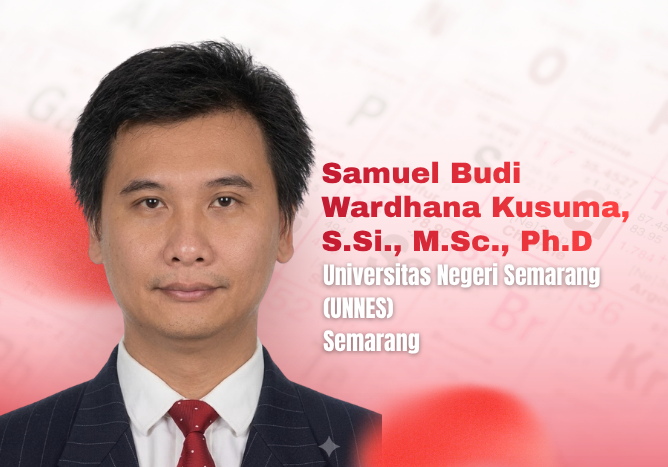
Name: Samuel Budi Wardhana Kusuma, S.Si., M.Sc., Ph.D.
Institution: Universitas Negeri Semarang (UNNES)
Country: Indonesia
Samuel Budi Wardhana Kusuma researches green and organic chemistry with a focus on transforming cellulose and other biomass into functional materials. His work uses ionic liquids and oxidative or dehydrogenative modification to produce cellulose esters, thermoplastic materials, membranes and bioplastics, including products derived from coconut coir and textile waste. By designing cleaner cellulose chemistry and bio-based formulations, he advances practical routes from renewable feedstocks to packaging, energy and protective materials.
Dr. Faisal Hamzah

Name: Dr. Faisal Hamzah
Institution: National Research and Innovation Agency (BRIN)
Country: Indonesia
Faisal Hamzah is a marine biogeochemist whose research examines how carbon, nutrients, oxygen and trace metals cycle through Indonesian coastal waters and marginal seas. His work investigates ocean acidification, deoxygenation, air–sea carbon dioxide exchange and the marine carbonate system, including how currents and seasonal oceanographic processes influence carbon transport and biological productivity. By studying environments ranging from estuaries and mangroves to the Indonesian Throughflow region, he contributes to understanding how tropical marine ecosystems respond to pollution, climate variability and wider environmental change.